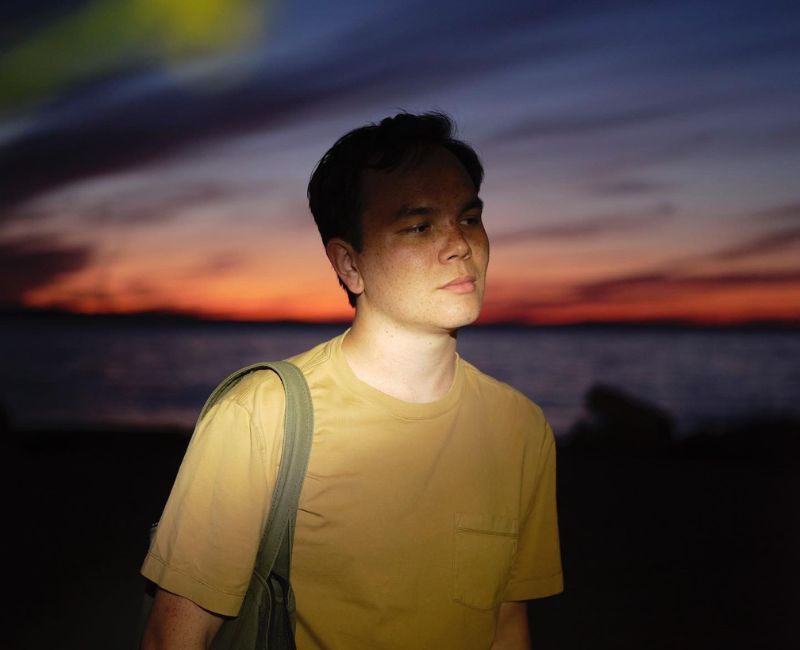
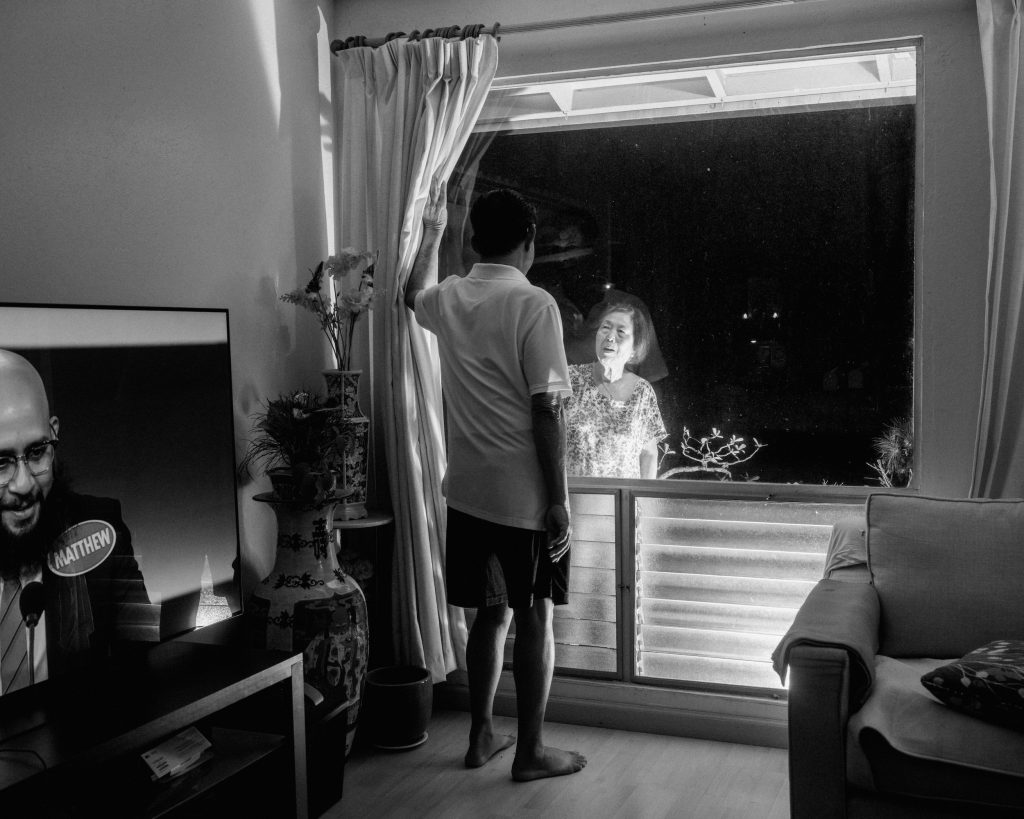
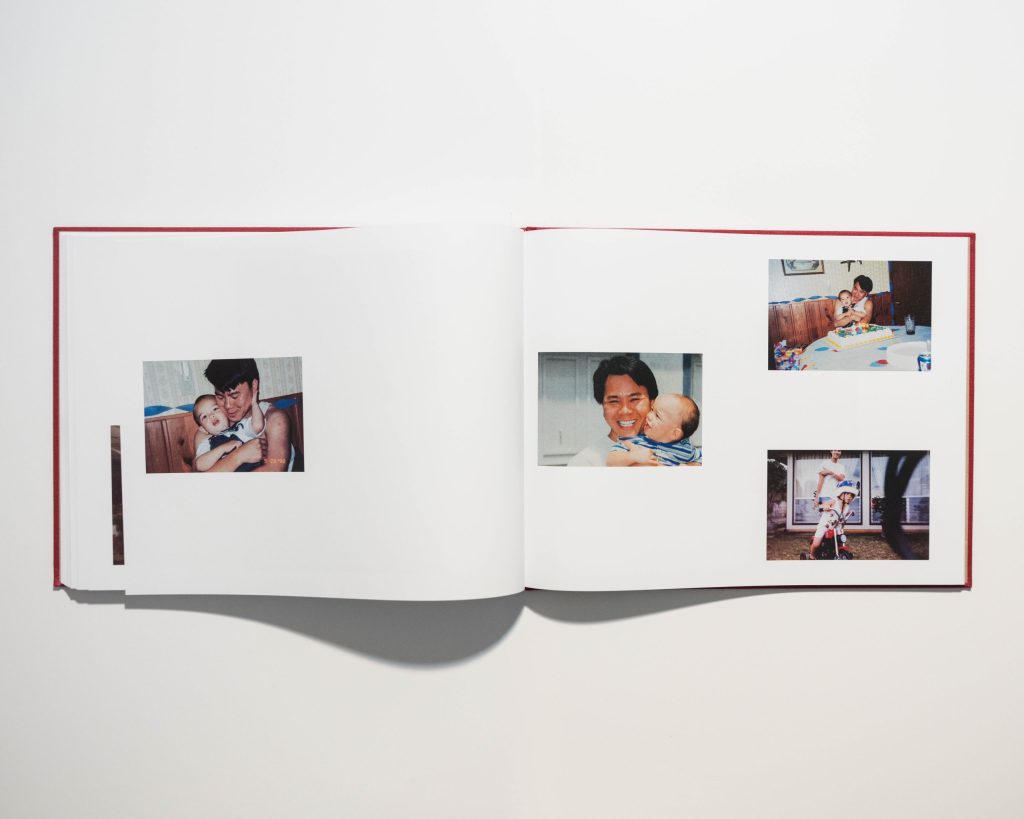
Brian Van Lau is a self-taught photographer and founder of the platform Arcanite Pictures. His first monograph, ‘We’re Just Here for the Bad Guys’ will be released this year. ‘We’re Just Here for the Bad Guys’ started out as a reunion with his estranged father, who had been diagnosed with brain cancer and proposed they work together on a project documenting his presumed recovery. Sadly, his father didn’t recover, passing away in 2020. The project morphed into something else: a search for who his father had been, an exploration of family bonds, an attempt to find answers for everything left unexplained.
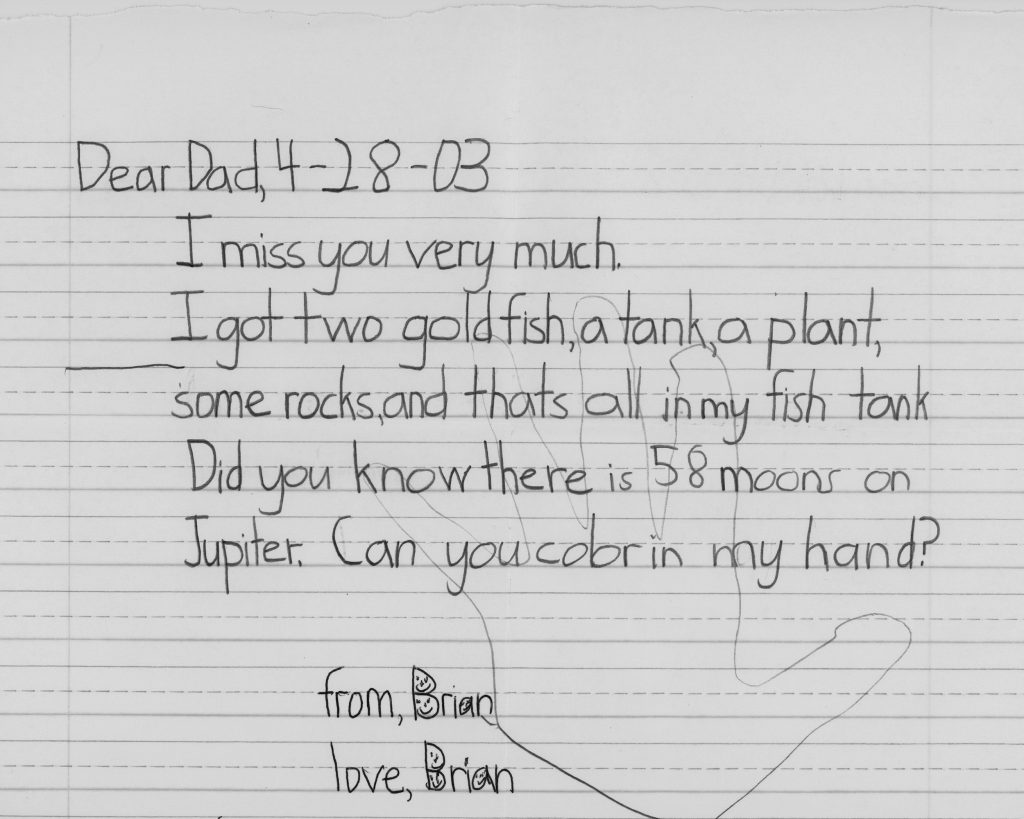
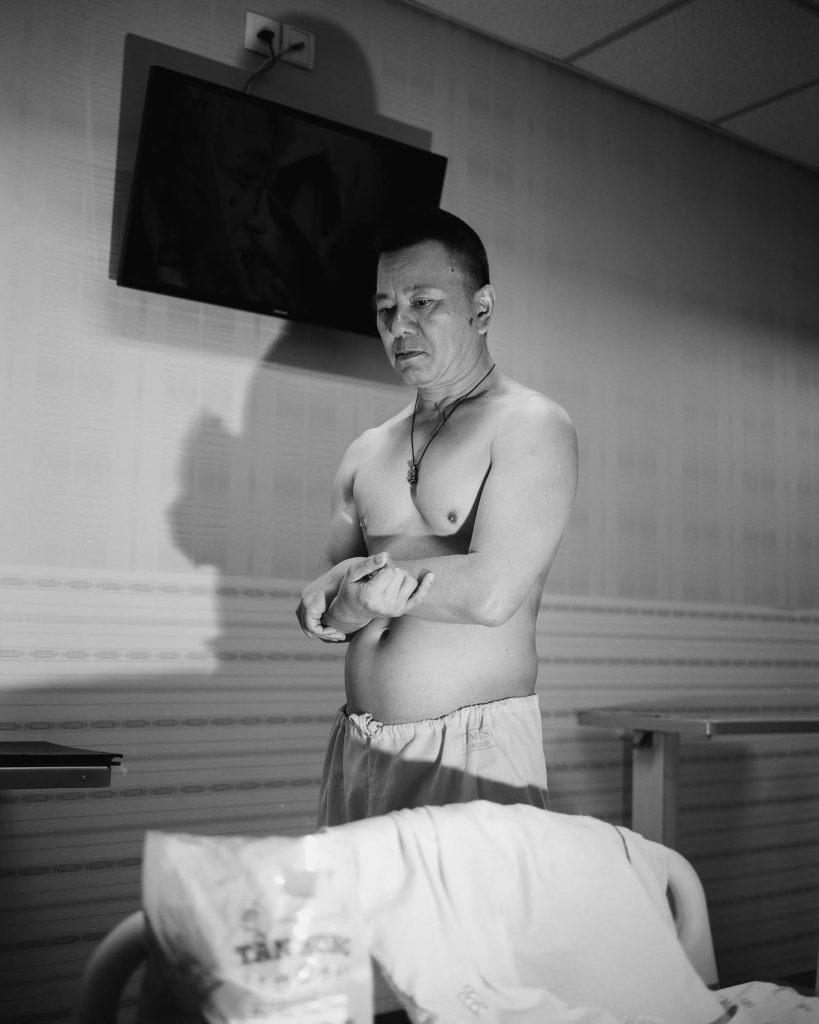
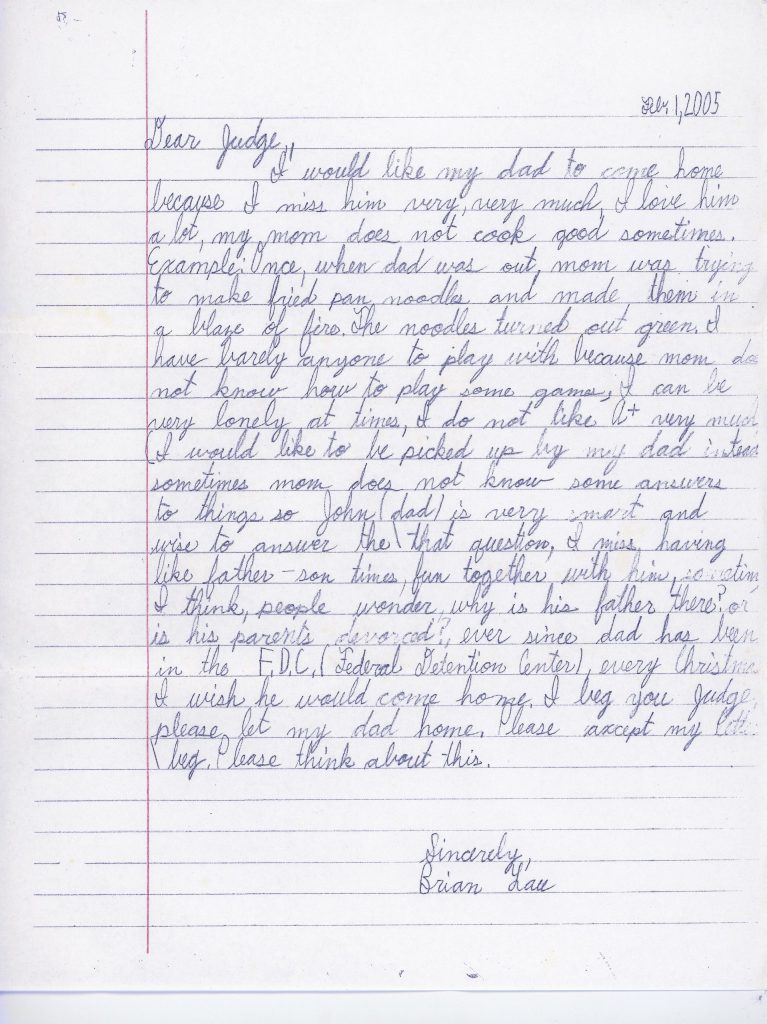
The result is tender, expansive and full of longing; it feels gigantic. Lau presents painfully intimate portraits of his sick father, together with childhood photographs and letters he wrote to him as a young boy, as the work folds into abstraction as grief, absence and acceptance begin to take shape.
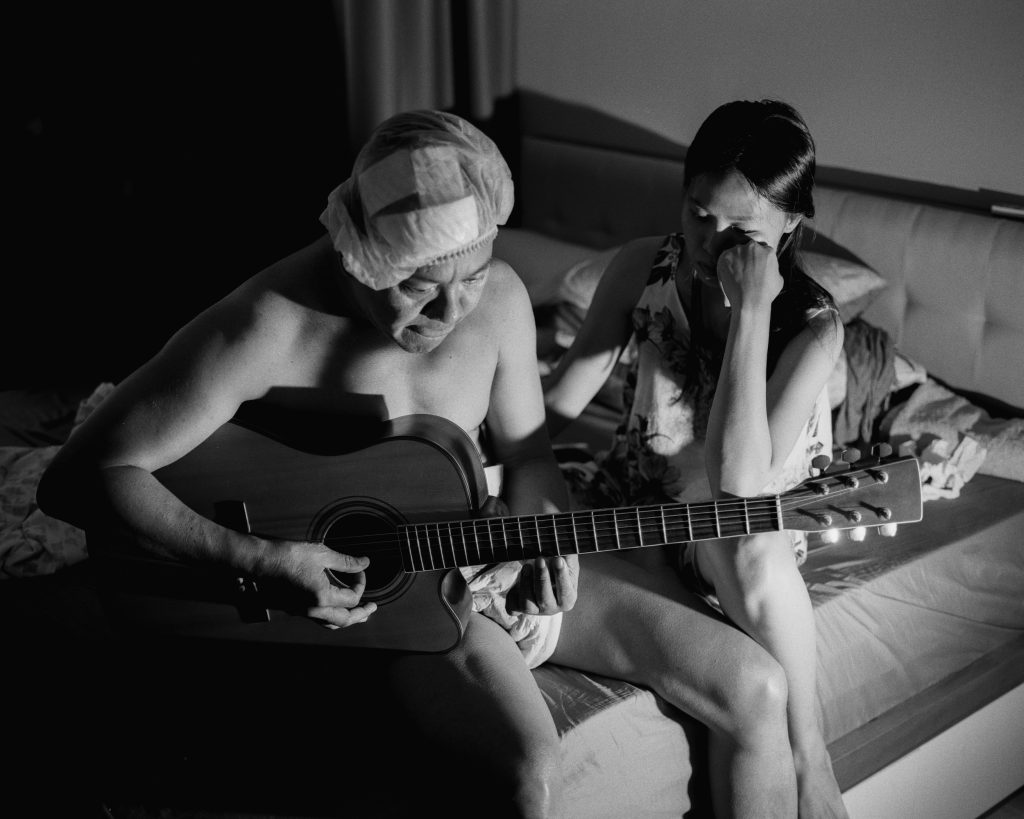
‘We’re Just Here for the Bad Guys’ started from your father’s suggestion to collaborate on a series of photographs. What were your first thoughts when he proposed this? And did you have a clear idea how you wanted to approach this collaboration?
There was a degree of vindication in him offering this, me knowing it was his attempt of making amends and finding a productive way for us to be together. Beyond that, we initially envisioned it more as an optimistic overcoming adversity story, as we both assumed. How it became what it is now took many years of shifting the work tonally, trying different methods of image making, and finding ways of making the black and white work become more predominant than what it was initially, all in color.
Can you recall a particular moment that really determined the final shape of this work?
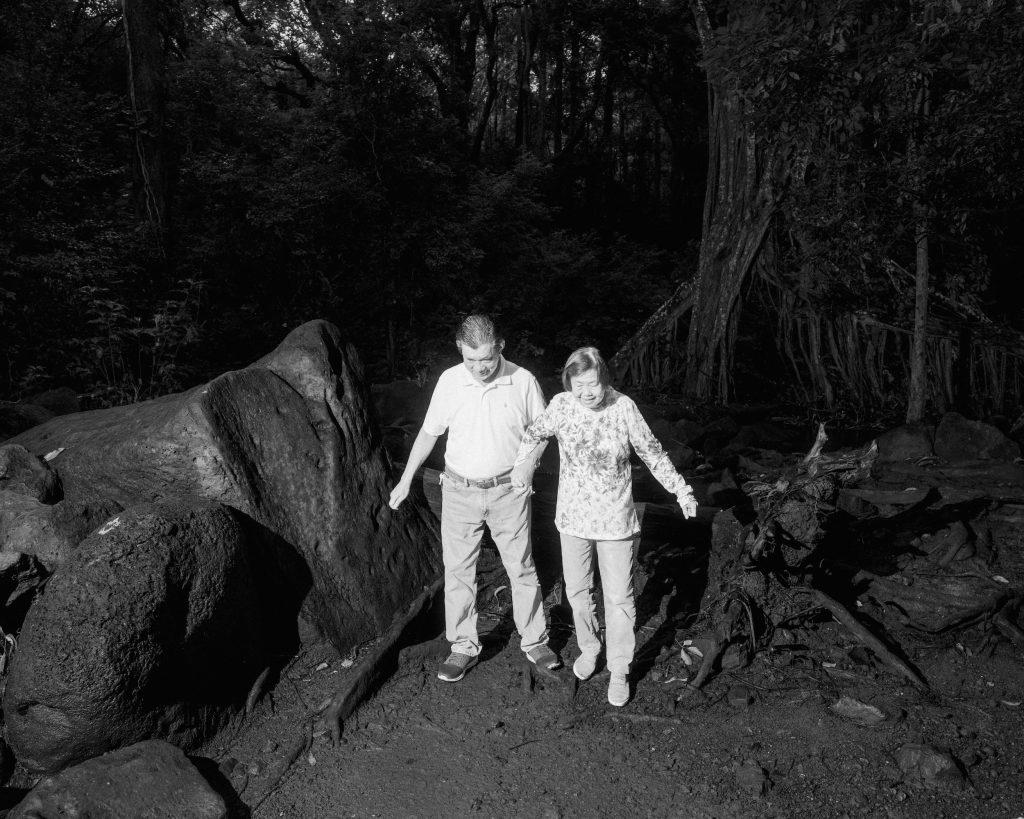
In 2020, after his passing, there was the biggest tonal shift, from it being an optimistic diaristic project centered on perseverance and sentimentality, to more of a psychological response and a reevaluation of what I even wanted with the work. In 2021, I uncovered letters that added more of my father’s voice, making it a bit more balanced in our portrayals. And in 2024, I spent more time with my Dad’s family, more intentionally photographing with them, and more with a finish line in mind, where I feel like the world actually fleshed itself out from a horror-diaristic response, to more of a theatrical and expressively narrative approach.
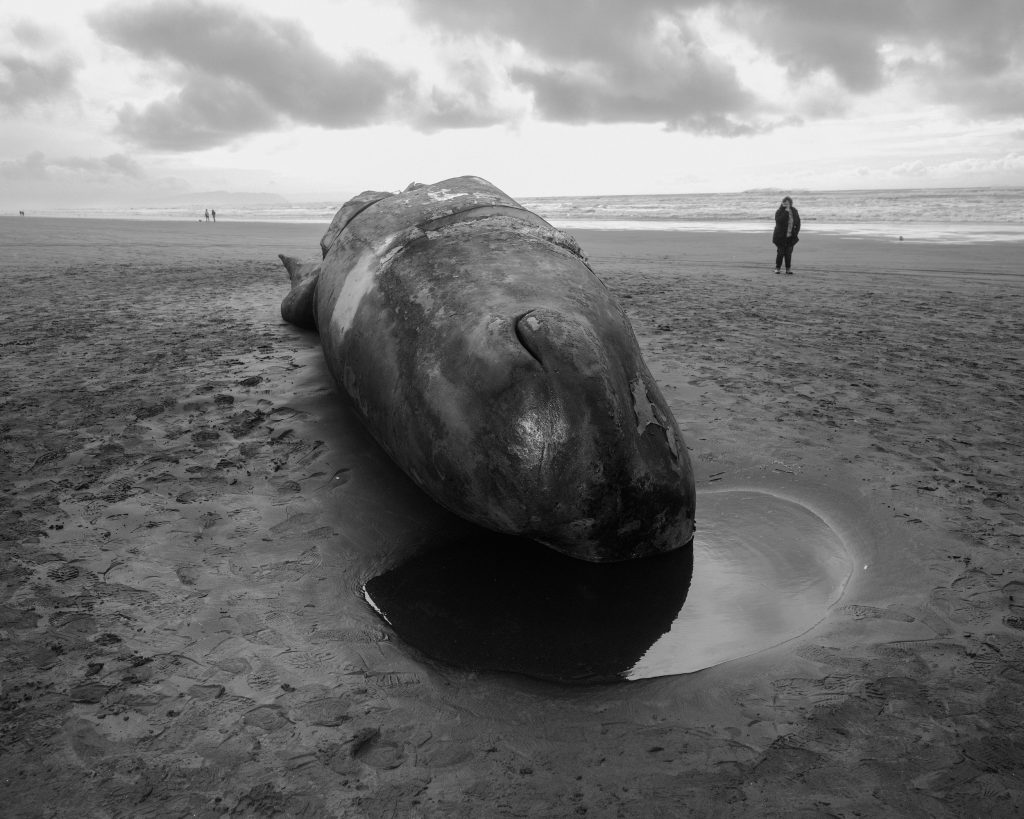
The work includes a photo of a stranded whale that I find really captivating; the more I look at it, the less it looks like a whale, slowly turning into a surreal, abstract presence. What’s the story behind this image, and what made you include it in the project?
Initially, I was just photographing around the Washington and Oregon coasts. Before the whale was taped off at this beach on the Oregon coast, onlookers were all recording it on their phones. I made a variety of the same picture, but the oblong body, and resemblance of blood via the pool of water next to it in monochrome, made it feel more calm, and mythological to me?
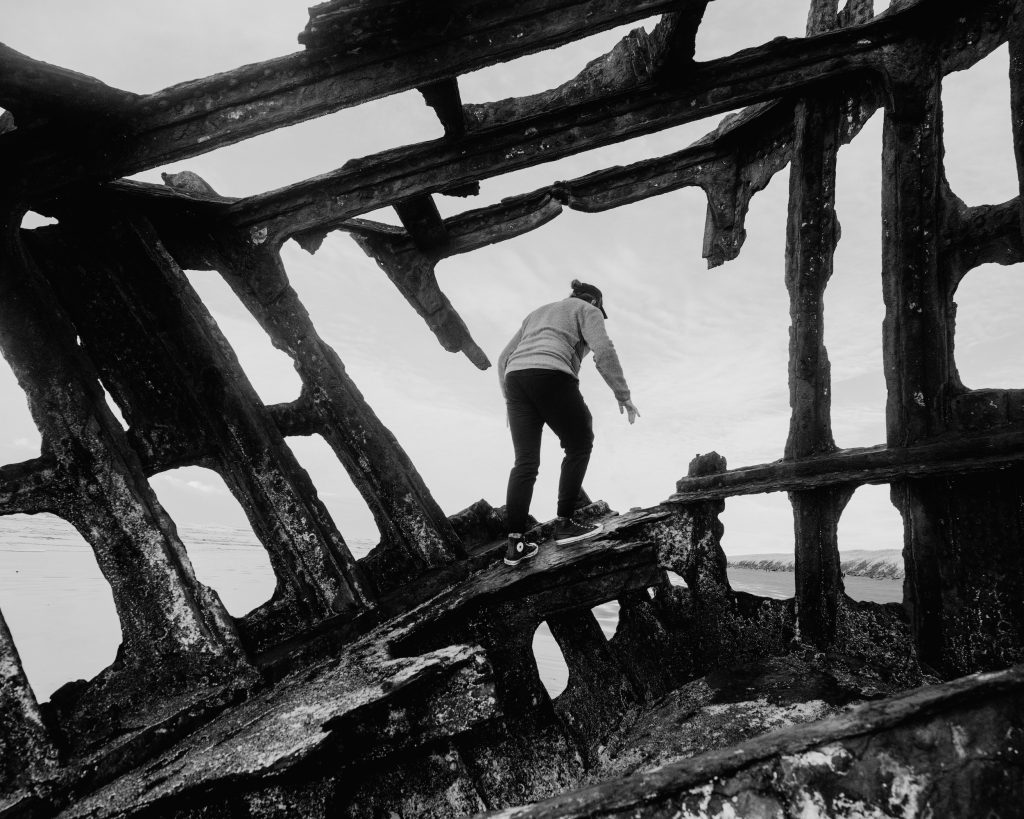
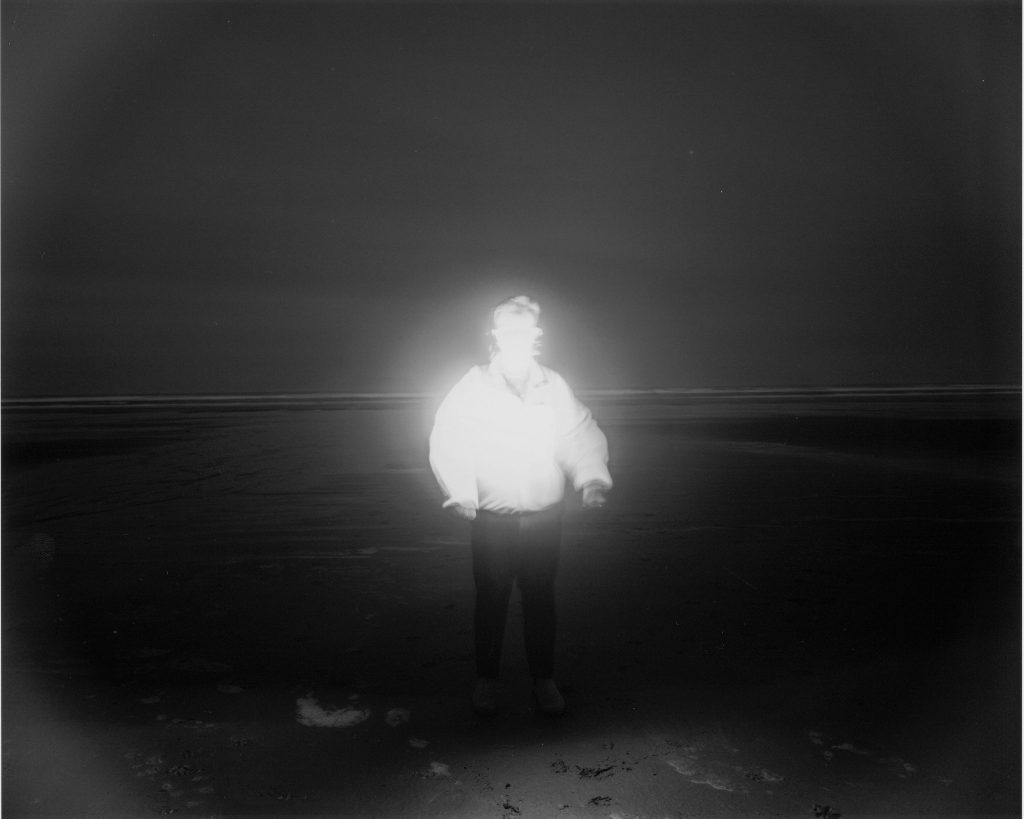
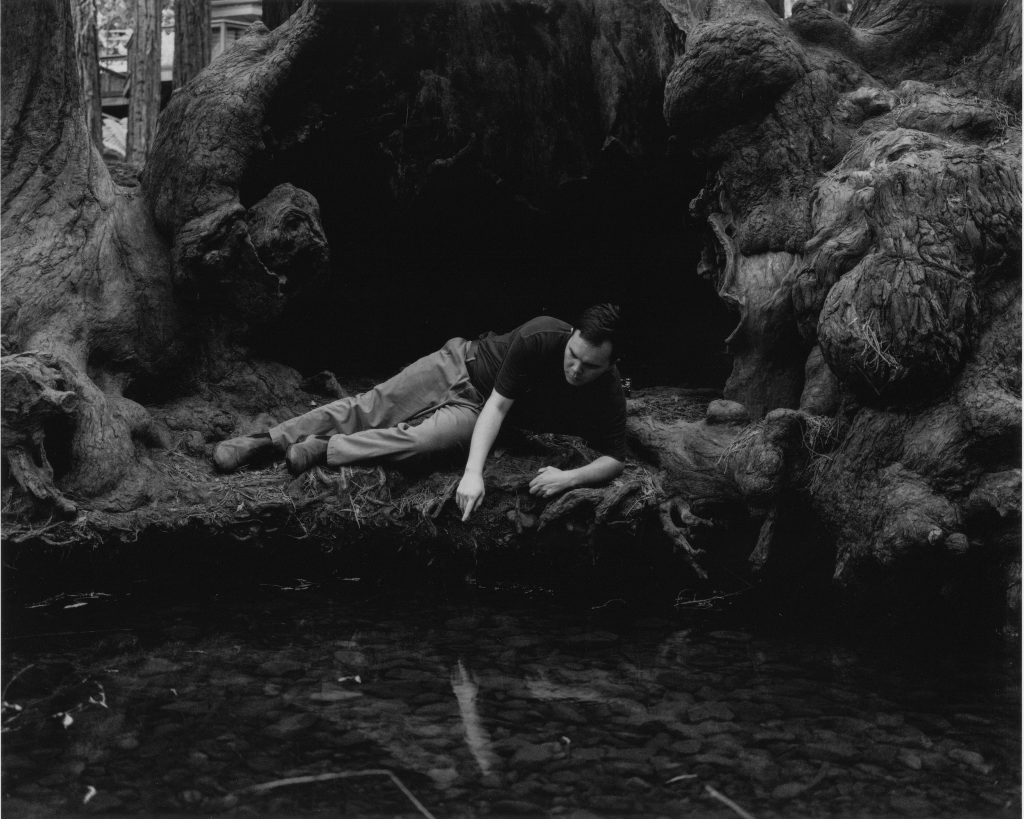
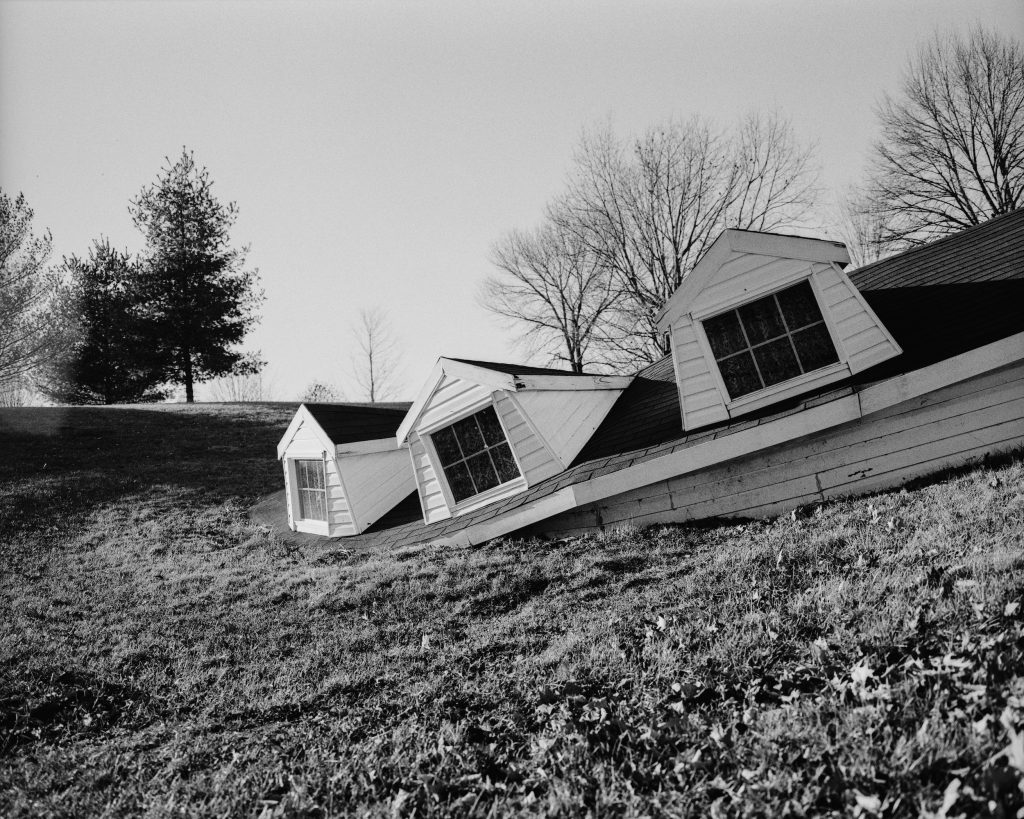
In context of the project, there’s a lot of allusions to water, trees, and non-diegetic lights, so the appearance of a whale read to me as a stand-in for a few things that couldn’t be directly personified: my own grief, my father’s power and familial shadow, and somehow an acceptance of it all. When paired with the jagged structure and the boy escaping the portal, I think it reads a bit more explicitly as an escape of resolve from some sort of entrapment, emotionally and psychologically.
In a 2020 interview, you talk about a project called ‘Lost Boy Scout’, which deals with the complex role of masculinity in contemporary society. This feels very connected to ‘We’re Just Here for the Bad Guys’ and the way you portray your father’s masculinity. For you, how do these projects relate to each other?
That’s an incredible deep dive… ’Lost Boy Scout’ was what I was making just prior to my father’s illness. It was my own attempt of writing a bildungsroman in photo form, questioning my gender role and actual stake in society as a then 22-year-old. I didn’t feel like I had a huge purpose or direction then, so I was looking at these different ideas of masculinity, or passive rejection of it, and trying to form something less pointed, and more about the importance of an identity without a role. The lost Boy Scout is still a scout, even without his troop?
I think in a similar way, ‘Bad Guys’ answers and heightens that question I had, showing a lot of shortcomings to my initial answer. Both attempt to answer the validity of an individual choice without its meaning to me: in ‘Bad Guys,’ the role I’d have as a son is constantly being shifted and betrayed, as the role of my father was being shaved down quickly as well – an authoritarian patriarchal figure without power, bodily strength, wealth?
(I hope some of this is making sense, I’m shocked you caught this connection from way back).
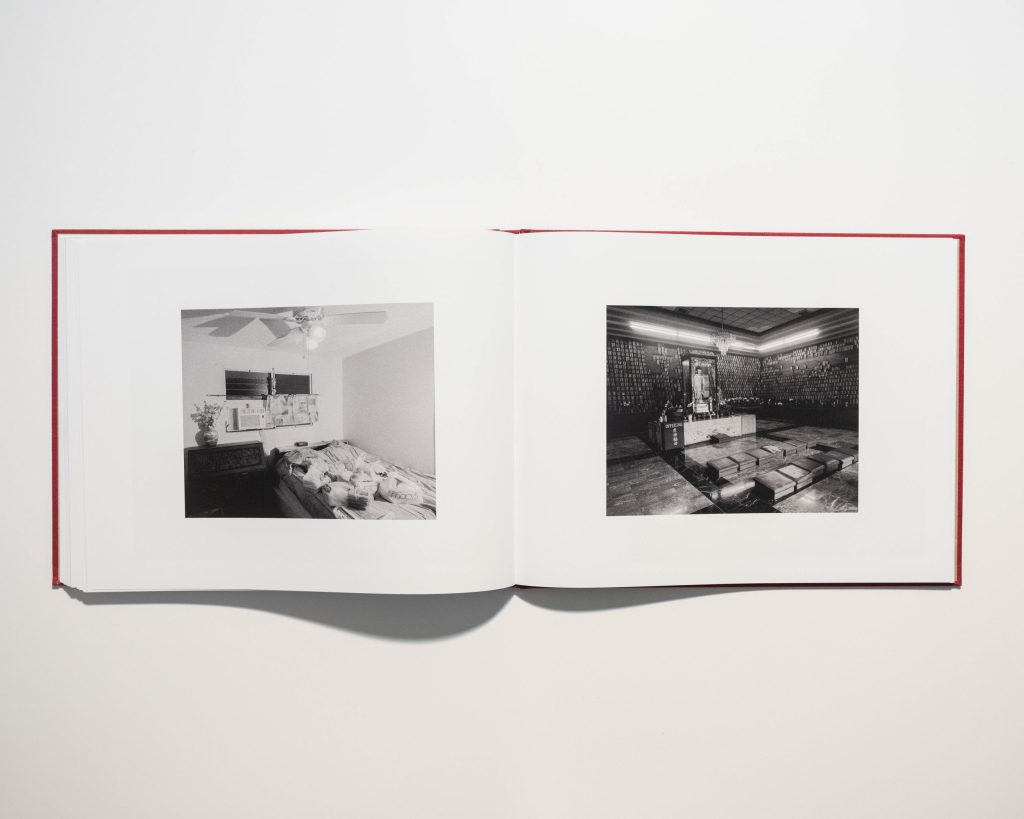
‘We’re Just Here for the Bad Guys’ will be released as a monograph and was shown as an exhibition earlier this year. I’m always curious about such curatorial processes. How do you make the final selection of photos, and how do you decide on the order in which they’re presented?
The exhibition was curated in partnership with Dan Boardman, the director of Light Work, who understood the specific space better than I could. I’d like to think of myself as a sharp editor, but trying to cut a 60-70 image project, intended to be read with all images, to maybe twelve pictures is a huge challenge. The work isn’t the same at all at that point, but the essence and interpretation of it can still remain there.
I think of myself more as a filmmaker translated into photo books, so this project especially was always intended to be in book form with a particular flow, tension, and narrative interjection. I try to edit like it’s an action movie, or a manga panel, cutting to just the most essential information to make the chapter flow, while holding space for the images that matter most. I’m a big fan of Tite Kubo’s ‘Bleach’ for instance, and the manga paneling and conveyance of information is incredibly effective and memorable. The importance of an image lands immediately and iconically, and I always strive for that kind of planning.
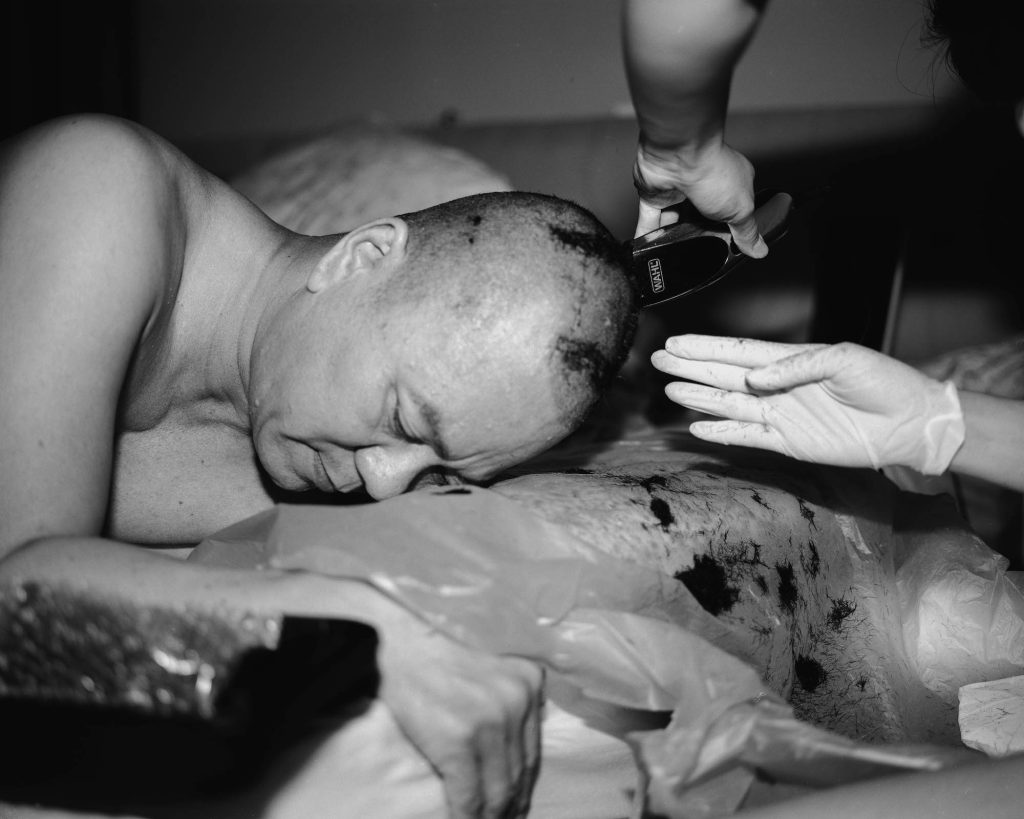
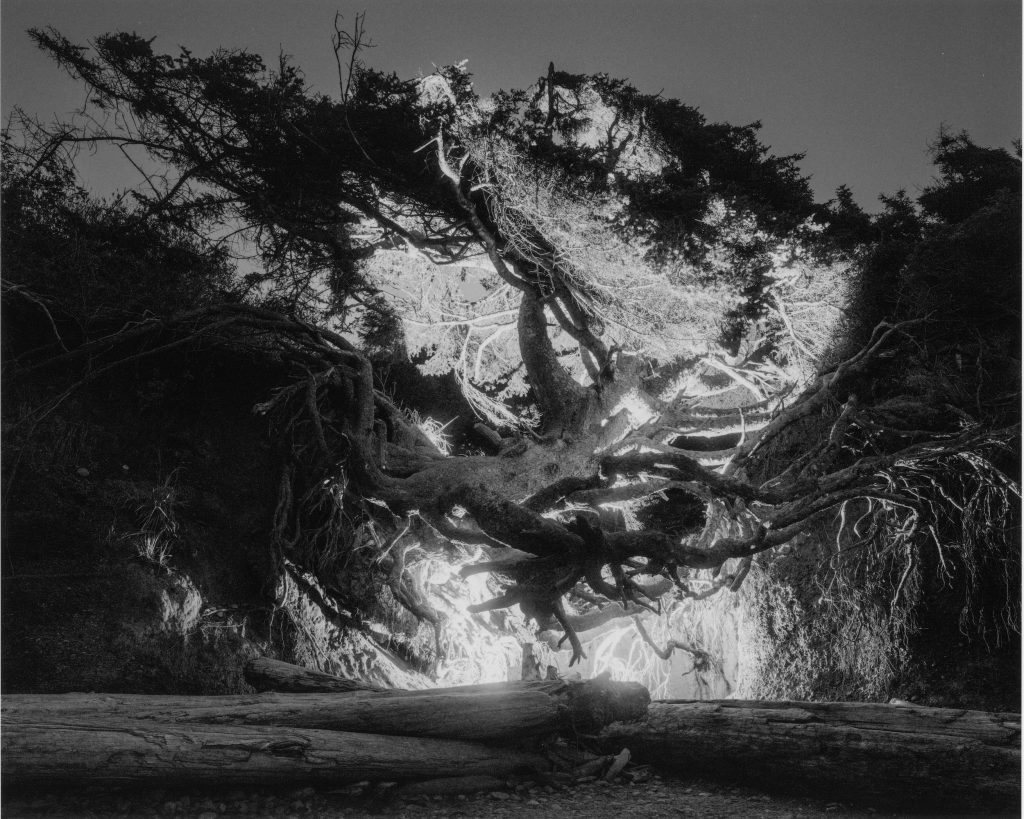
From your father’s cancer diagnosis in 2019 to the release of the monograph, you worked on this project for about seven years. Do the project and the journey feel fully finished now?
I feel finished in my personal understanding of what this experience was, but I’m surprised by the journey not actually being over. There’s life cycles I don’t know about, or how to navigate, and the book is (technically) not out yet.
You are self-taught. What differences do you see between yourself and photographers with a formal education? Any lessons that you wish you’d learned sooner?
Hahaha, I’m not really sure what differences I can see anymore either. I used to focus on not having the technical ability, or understanding of certain concepts and historical contexts, but I think the validity of photographers comes in such a huge range now. I think I’m always learning, but I wish I got my ass beat roughly three years earlier. I needed a good foundation, even if it wasn’t at school. The failures of a lot of these projects have shown me to not look for the simple answer, but to look for an even simpler answer if I wanna get paid. There’s no room for subtlety when it comes to a paycheck, but subtlety is all that I look for in a photo project now.
You’ve mentioned Mirror (Zerkalo) by Andrei Tarkovsky as one of the films that inspire your work (as well as your Instagram handle: @Zerkalou). What about this film do you find so inspiring?
Hahaha, I made that my handle around 2016. I was just into Tarkovsky at the time and friends convinced me not to change it. Mirror and its unconventional narrative techniques and perfect photography made a huge impressions on me. Truthfully, and embarrassingly, after ten years of having it as my handle, I can’t remember the profound feelings I had with that film anymore, except that I was always drawn to stories about boyhood, memory, and deeply inexplicably powerful photography.
In 2022 you founded Arcanite Pictures, a platform for highlighting photographic talent. Why did you decide to start this platform? And what do you look for in a photographer?
I was frustrated with my experiences with photo platforms in general, and one website in particular who will remain nameless, who ended up not honoring my requests for how I wanted my work displayed, talked about, etc., and I felt very alienated from how an editor would use my work vs how I knew it needed to come across. So I wanted to make a platform that very deliberately was a collaborative process, and needed the agreement on both parties before anything was posted. I wanted to see people talking about work informally, and personally, and the work to have a home outside of academic photography and commercial work.
A lot of the time, and I know for me, the work I’m most interested in is really just about a relationship, and how image making unfolds from trying to describe that relationship. I look for primarily underrepresented photographers, or ones introducing a rare, or new language.
You’ve said that most of your ideas “start from a desire to explore a certain aspect of the internet.” Is there anything that you’re currently exploring or hoping to explore?
The idea of the virality of an image. What makes something iconic, and traceable? How do you read the imprint of someone’s style?
More Brian Van Lau:
Interview with Urbanautica
Interview with It’s Nice That
Interview with Analog Artisans
Booooooom article about ‘Bad Guys’
Website